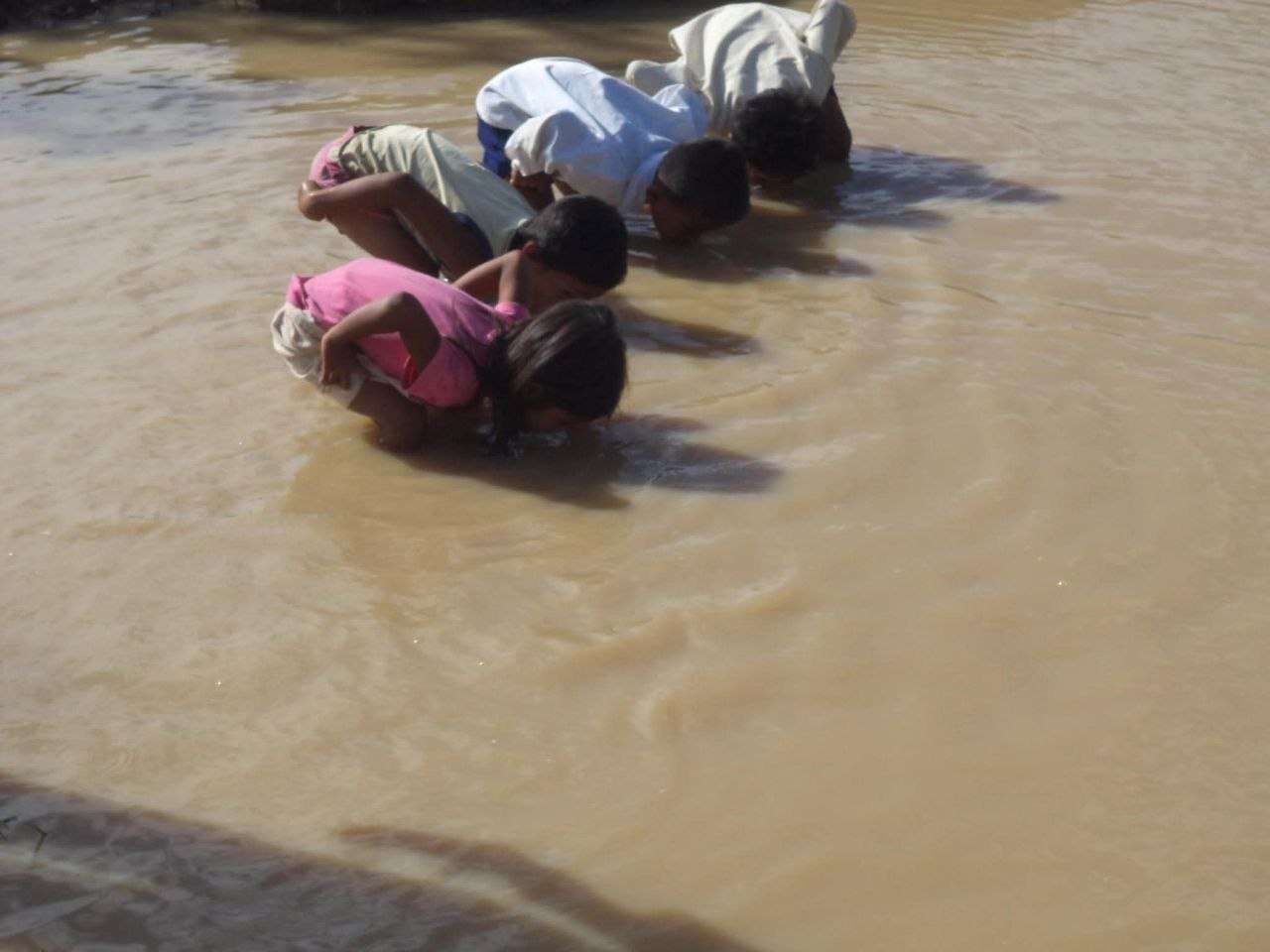
The United Nations Sustainable Development Goals are a shared blueprint for peace and prosperity. GSO's four pillars — Food Security, Sustainable Livelihoods, Forest & Wildlife Protection, and Climate Resilience — contribute to selected SDG targets in rural Cambodia. The pages below describe specific program activities, measured outcomes, and the SDG targets each activity is designed to contribute to.
SDG 1
No Poverty
Every family in GSO's service area receives a home study to match their specific situation with the right program. All systems run on solar power or locally generated inputs, eliminating electrical costs and external maintenance that families at the poverty line cannot afford.
Cow bank places livestock with single mothers and elderly women — first calf stays, second returns to GSO for placement with a new family
Solar aquaculture stations run at zero power cost, providing protein and income without adding financial burden
Financial literacy education prevents families from entering predatory microfinance debt cycles
GSO Impact
+41% household income in Samlout community after 3 years
SDG 2
Zero Hunger
GSO spent a year testing different conditions, plants, and seeds in shade houses and natural environments. Commercial seeds come pre-saturated in pesticides, creating dependency on annual purchases families cannot afford.
Shade house cultivation of Malabar Spinach, okra, and avocado — climate-resilient crops with no chemical inputs
Community seed banks preserve locally adapted varieties, reducing dependency on commercial seed purchases
Solar aquaculture provides consistent protein — 500–1000 catfish per tank with zero chemical treatment
GSO Impact
+24% food production increase in project communities
SDG 3
Good Health & Well-Being
The uneducated use of pesticides and chemical inputs is rampant in rural Cambodia. Glyphosate is handled and stored inside family homes, wicking into streams and soil. Awareness is almost non-existent and the sale of these chemicals is largely unregulated.
Zero chemical inputs across all aquaculture systems — organic catfish raised without antibiotics or treated feed
UV solar-powered lights replace chemical pesticides by attracting insects as free, natural fish feed
Community workshops educate families on health risks of glyphosate storage and chemical handling
GSO Impact
No chemical inputs across all aquaculture and farming systems
SDG 4
Quality Education
GSO began with children's education and has expanded to adult education — linking both through community-managed training centers.
Children's environmental education through coloring books and storybooks on climate change, poaching, and logging
Adult workshops cover permaculture, aquaculture, and chemical safety — building awareness where it is almost non-existent
Technical skills transfer to local staff who then train community members, creating a sustainable education multiplier
GSO Impact
Training centers handed over to community management
SDG 5
Gender Equality
GSO works substantially with women in leadership — village officers, program officers, and community leaders. Cow bank recipients are 100% female, often single mothers in remote locations where employment is seasonal.
Cow bank recipients are single mothers, elderly women, and female-headed households
Women serve as village chiefs, project officers, and technical staff — leaders, not just beneficiaries
Local veterinary students trained and employed, building female professional capacity in rural areas
GSO Impact
15 women-led families received cows in 2025–2026
SDG 6
Clean Water & Sanitation
Water in rural Cambodia is contaminated by agricultural chemicals. Water shortages are common; villagers extract water from rivers to irrigate crops, causing shortages and altering local ecosystems.
Water well access programs provide clean aquifer water, eliminating dependence on contaminated surface water
Solar-powered water pumps enable irrigation without electrical costs, doubling crop capacity
Community education on safe water storage — promoting aquifer over surface water sources
GSO Impact
Water well access and double-crop capacity via irrigation infrastructure
SDG 7
Affordable & Clean Energy
Solar power in Cambodia is incredibly affordable. Project areas have sufficient sunlight to generate enough power for most homes and community systems.
Aquaculture pumps run 24/7 on solar power — zero electricity bills for community food production
Solar fans, lights, and water pumps distributed to families, replacing reliance on government power infrastructure
UV solar-powered lights attract insects nightly as free fish feed — renewable energy fueling food production
GSO Impact
No power bill, no chemical inputs per community hub
SDG 8
Decent Work & Economic Growth
GSO employs entirely local staff — no foreign workers. We prioritize women and support underdeveloped sectors such as veterinary care.
Local hiring across all project communities — technical officers, project managers, and support staff from the villages served
Community enterprise development: goat herds, catfish farms, honey production, and eco-tourism guiding
Capacity building ensures staff and communities can operate projects independently long after GSO's direct involvement
GSO Impact
Local guides, vet services, and enterprise jobs created across 3 provinces
SDG 9
Industry, Innovation & Infrastructure
GSO's hybrid permaculture approach takes outputs from one project to support another — creating innovative closed-loop systems.
Closed-loop design: fish waste irrigates planting beds, goat waste grows chilis or is sold as fertilizer
Multi-discipline technical center co-locates innovations so they compound benefits across the entire system
All equipment built with locally sourced materials and designed for local repair — no imported parts required
GSO Impact
Original systems designed, built, and replicated locally
SDG 10
Reduced Inequalities
GSO serves communities that mainstream NGOs overlook — villages inside wildlife sanctuaries, ethnic minorities, and families whose livelihoods put them at risk of forest pressure.
Reaches communities inside Phnom Samkos Wildlife Sanctuary and remote border villages others cannot access
No-financial-burden principle ensures the poorest families are never excluded from programs
Local hiring from underrepresented groups builds capacity so projects are owned by the community
GSO Impact
50% women-led households served, local hiring across all project communities
SDG 11
Sustainable Cities & Communities
By integrating permaculture principles and using only locally sourced materials, GSO creates sustainable systems that are locally maintainable and repairable.
Community-managed infrastructure across 3 provinces — training centers, aquaculture stations, irrigation systems
Minimal training, minimal oversight design — failures resolved locally in days with basic skills
Trained community project officers living in the villages they serve provide ongoing support
GSO Impact
Community-managed infrastructure across 3 provinces
SDG 12
Responsible Consumption & Production
GSO's systems are designed as closed loops — one system's waste becomes another system's input. Zero chemicals. Zero waste.
Fish waste water rich in dissolved minerals irrigates planting beds instead of being flushed away
Goat waste grows hot chilis or is sold as fertilizer at local shops — secondary income from the same animals
UV insect attraction replaces chemical pesticides — renewable energy replacing harmful inputs
GSO Impact
Closed-loop systems: fish waste → irrigation, goat waste → fertilizer sales
SDG 13
Climate Action
Climate pressure creates food insecurity. Food insecurity drives forest exploitation. Forest loss increases climate vulnerability. GSO intervenes at every point in that cycle.
Shade houses create microclimates against oppressive heat, protecting crops and families from extreme weather
Community seed banks preserve climate-adapted crop varieties for drought and flooding resilience
Climate Emergency Reserve deploys immediately when families face crisis — preventing debt and forest exploitation
GSO Impact
3,600 hectares of forest enrolled in community monitoring from degradation
SDG 15
Life on Land
The change is palpable. What was a daily, never-ending sound of chainsaws has been replaced by the sounds of birds chirping in the village of Tampor.
Active intelligence sharing with Wildlife Alliance when organized poaching or logging appears in project areas
Community education that villagers are being baited and used — they bear consequences while orchestrators stay insulated
3,600 hectares of forest enrolled in community monitoring through community-led monitoring and sustainable livelihood alternatives
GSO Impact
reported decrease in audible chainsaw activity in project communities
SDG 16
Peace, Justice & Strong Institutions
GSO strengthens the link between communities and the authorities meant to protect them — while ensuring villagers are not exploited as tools of organized crime.
Intelligence sharing with Wildlife Alliance for enforcement against logging, poaching, and wildlife trafficking
Direct work with local authorities and government agencies to report crimes and support investigations
Anti-exploitation education — teaching villagers they are being used as tools of organized crime
GSO Impact
Active intelligence sharing with Wildlife Alliance for enforcement
SDG 17
Partnerships for the Goals
GSO's community-led model is built on partnership — not paternalism. Villagers identify problems, GSO helps evaluate solutions, locals own and manage results.
Active partnerships with Wildlife Alliance, World Food Programme, Wilde Ganzen, and Be More for multi-stage funding
Collaboration with Hidden Hearts Foundation for volunteer networks
Every project designed to be handed over to local government or community management — partnerships end with local ownership
GSO Impact
All properties handed over to local government/community
We Don't Just Reference the SDGs
Our projects contribute measurable progress toward them. Every program is designed to advance multiple goals simultaneously.